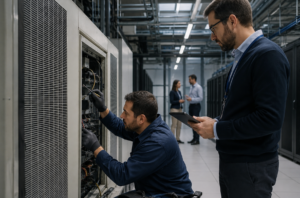
San Jose is one of the most technology-driven cities in the country, and that means IT teams are responsible for far more than laptops, software updates, cloud access, and cybersecurity alerts. In a city connected to the larger Silicon Valley technology ecosystem, businesses rely on nonstop digital performance. Servers need stable environments, employees need comfortable workspaces, networks need protected infrastructure, and buildings need systems that support productivity from the background.
That is where HVAC becomes more important than many companies realize.
For an IT department, a failing HVAC system is not just a facilities problem. It can quickly become a network problem, a hardware problem, a data protection problem, a customer service problem, and a business continuity problem. When office temperatures spike, server rooms overheat, equipment works harder, employees lose focus, and emergency repairs become more expensive than planned maintenance.
Smart IT teams in San Jose are paying closer attention to heating, ventilation, and air conditioning because modern technology depends on physical reliability. Even the most advanced digital systems still need stable power, clean air, controlled temperatures, and a building environment that does not put critical operations at risk. Waiting until an HVAC unit breaks down can expose a company to downtime, equipment damage, uncomfortable employees, frustrated customers, and avoidable emergency costs.
San Jose IT Teams Are Thinking Beyond Traditional Technology
The role of IT has expanded. Years ago, IT departments were mainly expected to keep computers running, protect passwords, manage networks, and respond when something went wrong. Today, IT leaders are often involved in business continuity, security planning, vendor evaluation, cloud migration, compliance, automation, smart building technology, and operational risk.
That shift is especially noticeable in San Jose, where the City of San José Information Technology Department has positioned technology as part of public service, innovation, artificial intelligence, and digital transformation. This local emphasis on smarter systems reflects what businesses are experiencing as well. Technology is no longer separate from the building. It is woven into the way an organization operates every day.
For private companies, medical offices, manufacturers, data-driven firms, schools, agencies, and professional service businesses, the IT team may not directly manage the HVAC system. However, IT often feels the consequences when HVAC systems fail. A poorly cooled server closet can trigger device failure. A hot office can slow productivity. Poor ventilation can affect comfort and workplace satisfaction. A sudden outage can interrupt customer-facing systems and internal workflows.
That is why the smartest IT leaders do not wait until the air conditioning goes out during a hot afternoon. They understand that the physical environment is part of the technology stack.
HVAC Problems Can Create Real Downtime
Downtime does not always start with a cyberattack or a software bug. Sometimes it starts with heat.
When temperatures rise inside an office, equipment rooms, network closets, and small server spaces can become vulnerable quickly. Switches, routers, servers, backup drives, phone systems, and security hardware all generate heat. If the HVAC system is already struggling, those devices may operate in conditions that shorten their lifespan or cause sudden shutdowns.
For companies that depend on cloud platforms, remote access, VoIP phones, security cameras, customer portals, or internal databases, even a short disruption can become a major inconvenience. IT teams spend years building redundancy into digital systems, but the physical environment can still become a weak point.
This is why proactive maintenance and fast service matter. A business looking for HVAC Repair San Jose is not only trying to restore comfort. It may also be trying to protect computers, servers, employees, customers, and daily operations from preventable disruption.
In San Jose, where so many organizations rely on technology-heavy workflows, HVAC reliability can support the same goal IT teams care about most: keeping systems running.
Data Centers and Tech Facilities Make Cooling a Serious Business Issue
The connection between cooling and technology is especially clear when looking at data centers. San Jose has been part of ongoing conversations about data center standards, energy use, infrastructure planning, and community impact, with local reporting from San José Spotlight showing how important these facilities have become to the region.
While most businesses do not operate massive data centers, they often have smaller versions of the same challenge. A server closet, network cabinet, equipment room, point-of-sale system, security hub, or communications closet can still become heat-sensitive. The scale may be smaller, but the risk is similar. Technology needs the right environment.
IT teams understand that cooling is not just about comfort. It is about performance and reliability. Heat can make hardware work harder. Dust and poor ventilation can create maintenance problems. Inconsistent temperatures can make sensitive systems less dependable. If a business has expensive equipment, uninterrupted internet, internal software, and customer-facing systems, the HVAC system becomes part of the operational foundation.
That is why preventive HVAC attention can be a smart business decision instead of a last-minute expense.
Smart Buildings Are Blending IT and Facilities
San Jose’s interest in digital modernization is not limited to private businesses. The city’s Digital Services efforts show how data, responsive services, and technology training can help organizations work better. That same idea applies inside commercial buildings.
Modern buildings increasingly use connected thermostats, sensors, automation tools, access control systems, energy dashboards, security platforms, and cloud-based monitoring. These tools often touch both IT and facilities. When HVAC systems become connected to building management platforms, IT may be involved in network access, security, device permissions, vendor software, and data visibility.
That means HVAC is no longer isolated equipment sitting on a roof or tucked away in a mechanical room. It can be part of a larger connected environment.
For IT teams, this creates two priorities. First, they need the HVAC system to work reliably so business operations stay stable. Second, they need connected building systems to be secure, maintained, and properly managed. A smart thermostat, building automation panel, or remote monitoring system may seem small, but it still belongs inside the broader technology conversation.
When IT and facilities work together, companies can catch problems earlier, reduce emergency repair situations, and make smarter decisions about comfort, efficiency, and uptime.
AI Growth Makes Physical Infrastructure Even More Important
Artificial intelligence is becoming a major topic in San Jose’s civic and business conversations. The city has received coverage for training employees to build AI tools, including reporting from StateScoop about San Jose’s AI upskilling program. AI, automation, and digital services are changing how organizations think about productivity.
But as companies become more digital, they also become more dependent on physical infrastructure.
AI tools, cloud systems, analytics platforms, online customer support, remote collaboration, and automated workflows all require reliable environments. Even when a company uses cloud-based software, the local office still depends on internet equipment, Wi-Fi access points, computers, monitors, phone systems, and backup devices. If the building becomes uncomfortable or equipment overheats, the digital advantage can disappear quickly.
This is one reason IT teams are paying more attention to HVAC before problems become emergencies. Technology growth increases the need for reliability. The more a company depends on digital systems, the less room it has for avoidable breakdowns.
Emergency HVAC Repairs Can Disrupt More Than the Temperature
An HVAC emergency rarely happens at a convenient time. It may happen during a heat wave, in the middle of a workday, before an important client meeting, during a software rollout, or when staff is already dealing with other problems.
Emergency repairs can also create a ripple effect. Employees may have to relocate. Equipment may need temporary cooling. IT may receive complaints about devices acting strangely. Managers may have to delay work. Customers may notice slower responses. If the building houses sensitive equipment, the risk becomes even greater.
Planned maintenance gives businesses more control. It allows teams to schedule service before peak demand. It helps identify worn parts, airflow issues, refrigerant problems, thermostat concerns, and system inefficiencies before they create a full breakdown.
For IT teams, this kind of planning feels familiar. It is the same mindset behind software patches, backups, monitoring tools, and cybersecurity reviews. Smart companies do not wait for failure before protecting critical systems. HVAC deserves the same preventive thinking.
San Jose’s Innovation Culture Encourages Proactive Planning
San Jose continues to build its identity around innovation, technology, and practical problem-solving. The city’s ITD in the News page highlights ongoing coverage around artificial intelligence, data strategy, civic technology, and government innovation. This kind of local environment influences how businesses think.
In an innovation-focused city, reactive maintenance is becoming outdated. Businesses are expected to be more efficient, more secure, more resilient, and more prepared. IT teams already live in that world. They monitor systems, prevent threats, create backups, review logs, and plan for outages.
HVAC maintenance fits naturally into that same mindset. A reliable building environment supports reliable technology. A comfortable workplace supports better employee performance. A well-maintained system supports lower risk and fewer surprises.
As more companies adopt advanced software, automation, and digital operations, the basics become even more important. Airflow, cooling, ventilation, and temperature control may not sound exciting, but they can make the difference between a normal business day and an expensive interruption.
IT Teams Can Help Build Better HVAC Response Plans
IT professionals do not need to become HVAC technicians. However, they can help companies create better response plans.
For example, IT teams can identify which rooms contain heat-sensitive equipment. They can document which systems are most critical. They can work with facilities teams to determine temperature thresholds for server closets and equipment rooms. They can help decide who should be notified if temperatures rise. They can also make sure connected HVAC controls are secure and properly managed on the network.
This kind of cooperation can prevent confusion when something goes wrong. Instead of waiting for employees to complain that the office is hot or for equipment to fail, the business can respond sooner.
San Jose’s push to create better technology pathways, including coverage from Government Technology about the city’s IT Innovation Hub, reflects a larger point: better systems come from better coordination. Businesses can apply the same idea internally. Facilities, IT, leadership, and trusted service providers should not operate in separate silos when physical comfort and digital uptime are connected.
Comfort Still Matters for Productivity
It is easy for IT conversations to focus only on servers, devices, and infrastructure. But people are part of the system too.
Employees do better work in comfortable environments. When an office is too hot, too cold, stuffy, or inconsistent, productivity suffers. People become distracted. Meetings feel longer. Customers may notice frustration. A business can have the best software in the world and still struggle if the workplace feels uncomfortable.
HVAC performance also affects first impressions. Clients, vendors, job candidates, and partners notice the environment when they walk into a building. A comfortable, professional space supports credibility. An uncomfortable space can make a company look unprepared.
For IT teams, this matters because technology exists to support people. If the workplace is not functional, the digital tools are not reaching their full value.
Conclusion
Smart IT teams in San Jose are paying attention to HVAC repair before it becomes an emergency because they understand how connected modern business has become. Cooling, ventilation, equipment protection, employee comfort, cybersecurity, smart building tools, and uptime are no longer separate conversations. They all support the same goal: keeping the organization running smoothly.
In a city shaped by innovation, artificial intelligence, digital services, and Silicon Valley expectations, businesses cannot afford to treat HVAC as an afterthought. A failing system can affect hardware, productivity, customer experience, and operational stability. Preventive attention can reduce emergencies, protect equipment, improve comfort, and give companies more control over their environment.
The smartest IT teams are not waiting for the building to become uncomfortable before taking action. They are working with facilities teams, leadership, and trusted HVAC professionals to protect the physical foundation that digital business depends on.
In San Jose, reliable technology starts with reliable infrastructure. That includes the air people breathe, the temperatures equipment depends on, and the HVAC systems working quietly in the background every day. ✅