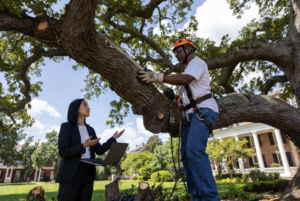
When people think about IT, they usually picture servers, software updates, cybersecurity threats, cloud storage, help desks, passwords, data backups, and the occasional office-wide panic when something stops working at the worst possible time. When people think about a Memphis arborist, they picture trees, limbs, roots, storm damage, pruning, disease, and property safety. At first, those two worlds may not seem connected.
But they are more alike than most people realize.
A healthy tree and a healthy IT system both depend on what happens before the emergency. A tree does not usually fall because of one windy afternoon. A computer network does not usually fail because of one small glitch. Bigger problems often come from small warning signs that were missed, ignored, or pushed aside until they became expensive.
That is where the lesson from a Memphis arborist becomes useful for any IT website, business owner, property manager, or operations team. The secret is not waiting until something breaks. The secret is learning how to inspect, maintain, strengthen, and protect the system before failure happens. 🌳💻
A Memphis Arborist Understands That Problems Start Before They Become Visible
One of the most important things an arborist does is look for problems that most people do not notice. A tree may look strong from the sidewalk, but an experienced arborist may see early signs of disease, root stress, poor structure, soil issues, deadwood, pest activity, or storm vulnerability. To the untrained eye, the tree looks fine. To the trained eye, the tree is already sending warnings.
IT works the same way. A business network may look fine because the computers turn on and the internet works. But behind the scenes, there may be outdated software, weak passwords, overloaded devices, poor backup systems, unpatched security risks, or old equipment that is one bad day away from failure.
That is why the State of Tennessee’s Strategic Technology Solutions division focuses on planning, resources, execution, coordination, technical direction, services, and infrastructure for state information systems. Strong technology operations are not built on reaction alone. They depend on structure, planning, and consistent oversight.
A Memphis arborist would say the same thing about trees. The best time to identify risk is before limbs fall, roots fail, or decay spreads. The best time to strengthen IT is before the system crashes, data disappears, or security is compromised.
Preventive Maintenance Is Less Expensive Than Emergency Repair
Tree emergencies are stressful because they usually happen at the worst time. A storm moves through Memphis, a large limb falls near a building, a tree blocks access, or a property owner suddenly realizes that a neglected tree has become a safety concern. At that point, the work is no longer simple maintenance. It becomes urgent response.
IT emergencies follow the same pattern. A server goes down during business hours. A website stops loading when customers are trying to contact the company. An employee clicks a suspicious link. Files vanish because backups were not tested. A business suddenly learns that its system was more fragile than it looked.
Preventive maintenance is not always exciting, but it is almost always smarter than waiting for damage. Tree inspections, proper pruning, health evaluations, and risk assessments can reduce the chance of dangerous failures. In IT, updates, monitoring, cybersecurity reviews, backup testing, and equipment audits can reduce the chance of serious downtime.
The Tennessee government’s State Government Cybersecurity information explains how cybersecurity is managed at the enterprise level through centralized IT leadership, cybersecurity, and risk management. That matters because risk does not disappear by itself. It has to be managed before it grows.
For property owners searching for qualified tree care help, working with an Arborist Near Me Memphis can help identify tree issues before they become bigger property problems. For IT teams, the same principle applies: bring in the right expertise early, not after the damage is already done.
Small Warning Signs Should Never Be Ignored
A tree often gives signs before failure. There may be cracking bark, dead branches, mushrooms near the base, leaning, exposed roots, canopy thinning, insect activity, or limbs that look weak after storms. These signs may seem minor, but they can point to deeper problems.
IT systems also show warning signs. Slow loading times, frequent password resets, unusual login attempts, outdated plugins, strange error messages, random disconnections, overheating hardware, and repeated employee complaints can all be early indicators of bigger issues.
The problem is that small issues are easy to normalize. A business owner may say, “The website has always been a little slow.” A property manager may say, “That branch has looked dead for years.” An office may say, “The system freezes sometimes, but it comes back.” Those statements are often the beginning of a bigger problem.
The University of Tennessee, Knoxville’s Office of Innovative Technologies maintains a security news category that highlights technology alerts and security-related updates. That kind of communication is important because awareness helps people respond before a small issue becomes widespread.
A Memphis arborist looks at a tree with the assumption that symptoms matter. IT professionals look at systems the same way. The small signals are not interruptions. They are information.
The Strongest Systems Are Built with Layers of Protection
A healthy tree is not protected by one thing. It needs strong roots, good soil, proper structure, enough space, balanced pruning, and protection from disease or pests. If one layer weakens, the rest of the tree may still hold for a while, but the risk increases.
IT security is also layered. A business should not rely on one password, one firewall, one backup, or one person who “knows where everything is.” Strong IT protection may include secure access controls, multi-factor authentication, endpoint protection, cloud backups, employee training, software updates, network monitoring, and disaster recovery planning.
This layered approach is especially important as Tennessee continues to grow in technology, research, logistics, healthcare, education, and business infrastructure. The FedEx Institute of Technology at the University of Memphis brings together experts, training programs, webinars, hackathons, and emerging technology discussions that support innovation and skill development.
That kind of technology leadership reflects a bigger truth: systems need support from multiple directions. A tree needs more than water. IT needs more than antivirus software. Businesses need a full view of risk, not a single quick fix.
Storms Reveal Weaknesses That Were Already There
In Memphis, storms can expose tree problems quickly. A tree with poor structure, hidden decay, weak branches, or compromised roots may stand for years until heavy wind or rain puts pressure on it. The storm gets blamed, but the weakness was often there first.
IT has its own storms. A sudden traffic spike, a ransomware attempt, a failed update, a power outage, a vendor disruption, or an employee mistake can reveal problems that were already hiding inside the system. The event may be sudden, but the vulnerability may have been building for months or years.
This is why testing matters. Arborists assess trees before storms cause damage. IT teams should test backups, review security, check access permissions, evaluate vendors, and confirm recovery plans before something goes wrong.
Oak Ridge National Laboratory’s work in cybersecurity shows how serious technology environments require advanced security protocols, cyber resilience, and protected data practices. While most small businesses do not operate like a national laboratory, the lesson still applies. Critical systems need preparation, not panic.
A tree that survives a storm usually had strength before the storm arrived. An IT system that survives disruption usually had planning before the disruption happened.
Growth Without Maintenance Creates Risk
Growth sounds positive, and it usually is. A tree grows taller, spreads wider, and adds shade and beauty to a property. But unmanaged growth can create problems. Branches may grow too close to buildings, power lines, roofs, signs, sidewalks, or parking areas. Weight distribution can become uneven. Crowded limbs can limit airflow. Roots may become stressed by construction, soil compaction, or poor drainage.
Business growth creates similar IT pressure. A company adds employees, devices, software subscriptions, customer records, cloud tools, payment systems, email accounts, websites, and digital workflows. At first, everything may feel manageable. Over time, the system becomes more complicated.
Without maintenance, growth creates hidden risk. Old employees may still have access to accounts. Software subscriptions may overlap. Website plugins may go unused but remain active. Files may be stored in too many places. Customer data may not be organized securely. The business grows, but the IT structure does not grow with it.
The broader technology landscape in Tennessee includes major cities, universities, research centers, logistics operations, healthcare networks, and business sectors that all depend on reliable infrastructure. As businesses grow in this environment, technology must be treated as part of the foundation, not an afterthought.
A Memphis arborist would not tell a property owner to stop a tree from growing. The goal is healthy growth. IT should work the same way. Growth is good when it is guided, monitored, and supported.
Expert Eyes Can See What Routine Users Miss
Most property owners can see when a tree has fallen. Fewer can identify early structural weakness, disease patterns, root-zone problems, or pruning mistakes. That is why arborist knowledge matters.
Most business owners can tell when the internet is down. Fewer can evaluate network architecture, cybersecurity risk, backup integrity, domain health, DNS issues, server configuration, or software vulnerabilities. That is why IT expertise matters.
The value of an expert is not only in fixing what is obvious. The real value is in seeing what others miss.
This is especially important for businesses that depend on websites, online forms, customer databases, appointment systems, email marketing, cloud platforms, or digital payments. A hidden weakness can affect revenue, reputation, customer trust, and daily operations.
Tennessee’s growing focus on artificial intelligence, cyber readiness, and digital workforce development can be seen through efforts like AI Tennessee, which highlights research, innovation, and technology leadership connected to the state’s future. That kind of forward-looking mindset is exactly what businesses need at the local level.
The same is true for tree care. A property owner who waits until a tree becomes visibly dangerous may face fewer options and higher costs. A business that waits until its IT system fails may face downtime, data loss, customer frustration, and emergency repair bills.
Documentation Matters in Tree Care and IT
Good arborist work is not just physical labor. It also involves assessment, recommendations, planning, and communication. A property owner may need to know which trees are healthy, which need pruning, which should be monitored, and which may need removal. Documentation helps make better decisions over time.
IT documentation is equally important. Businesses should know what software they use, who has access, where data is stored, when backups run, which vendors support key systems, when warranties expire, and what steps to take in an emergency.
Without documentation, businesses rely on memory. That becomes dangerous when an employee leaves, a vendor changes, a system fails, or an urgent decision has to be made quickly.
A Memphis arborist can explain this simply: guessing is not a plan. In tree care, guessing about health and structure can lead to property damage. In IT, guessing about systems and security can lead to operational failure.
The Real IT Secret Is Not Complicated
The secret to avoiding bigger IT problems later is not mysterious. It is the same lesson a Memphis arborist applies every day: inspect early, maintain consistently, respond to warning signs, protect the structure, and never assume that silence means safety.
A quiet tree may still have decay. A quiet network may still have vulnerabilities. A green canopy may still hide weak limbs. A working computer system may still be one missed update away from a serious problem.
The smartest businesses do not wait for collapse. They build habits around prevention.
They schedule reviews. They listen to experts. They take small issues seriously. They understand that maintenance is not wasted money. It is protection against bigger loss.
Conclusion
A Memphis arborist and an IT professional may work in very different environments, but they understand the same truth: big problems usually begin as small problems that were ignored too long.
Trees need inspections, pruning, health management, and risk awareness before they threaten a property. IT systems need updates, monitoring, cybersecurity planning, backups, documentation, and expert review before they threaten a business.
For an IT website, this comparison is powerful because it makes technology risk easy to understand. A business owner may not fully understand servers, firewalls, DNS settings, endpoint protection, or cloud infrastructure. But they can understand a tree limb hanging over a roof. They can understand how neglect leads to risk. They can understand why prevention is better than emergency repair.
That is the lesson a Memphis arborist can teach any IT team, business owner, or decision-maker: do not wait until the crash, break, breach, fall, or failure. Take care of the system while it is still standing. 🌳